Sri Mukkanteeshwara Swamy
A Shiva shrine attributed to the Kakatiya period, associated with King Prataparudra.
Sri Siddeswara Swamy and the sacred shrines of Siddula Gutta
ॐ నమః శివాయ
The presiding deity of the kshetram is a Swayambhu — self-manifested — Shiva lingam, worshipped within a cave on the Siddula Gutta hill. Untouched by any sculptor's chisel, it is revered as having risen of its own accord: a living form of Lord Shiva, the auspicious one who dispels ignorance and grants liberation.
Tradition holds that the lingam grows a little every year — a sign to devotees of the Lord's living presence. To stand before it in the cool half-light of the cave is to sense the timeless stillness of Kailasa itself.
As the chant of 'Om Namah Shivaya' fills the shrine, pilgrims offer bilva leaves, sacred ash and abhishekam at the feet of Siddeswara — the Lord of the Siddhas, worshipped here for centuries.
Lord Shiva is adored not in a human likeness alone but in the aniconic lingam — a symbol of the formless, infinite Absolute. At Siddula Gutta this worship follows the timeless Shaiva tradition.
The three-leaved bilva, most beloved of Shiva, is offered leaf by leaf with the Lord's sacred names.
The lingam is bathed with water, milk and panchamrita amid Vedic chants — the very heart of Shaiva worship.
Sacred ash upon the brow and the rudraksha bead mark the devotee as a child of Lord Shiva.
Beyond the presiding Siddeswara Swamy, the sacred hill shelters a constellation of ancient shrines and cave temples.
A Shiva shrine attributed to the Kakatiya period, associated with King Prataparudra.
Additional Shiva lingams on the hill venerated alongside the main shrine.
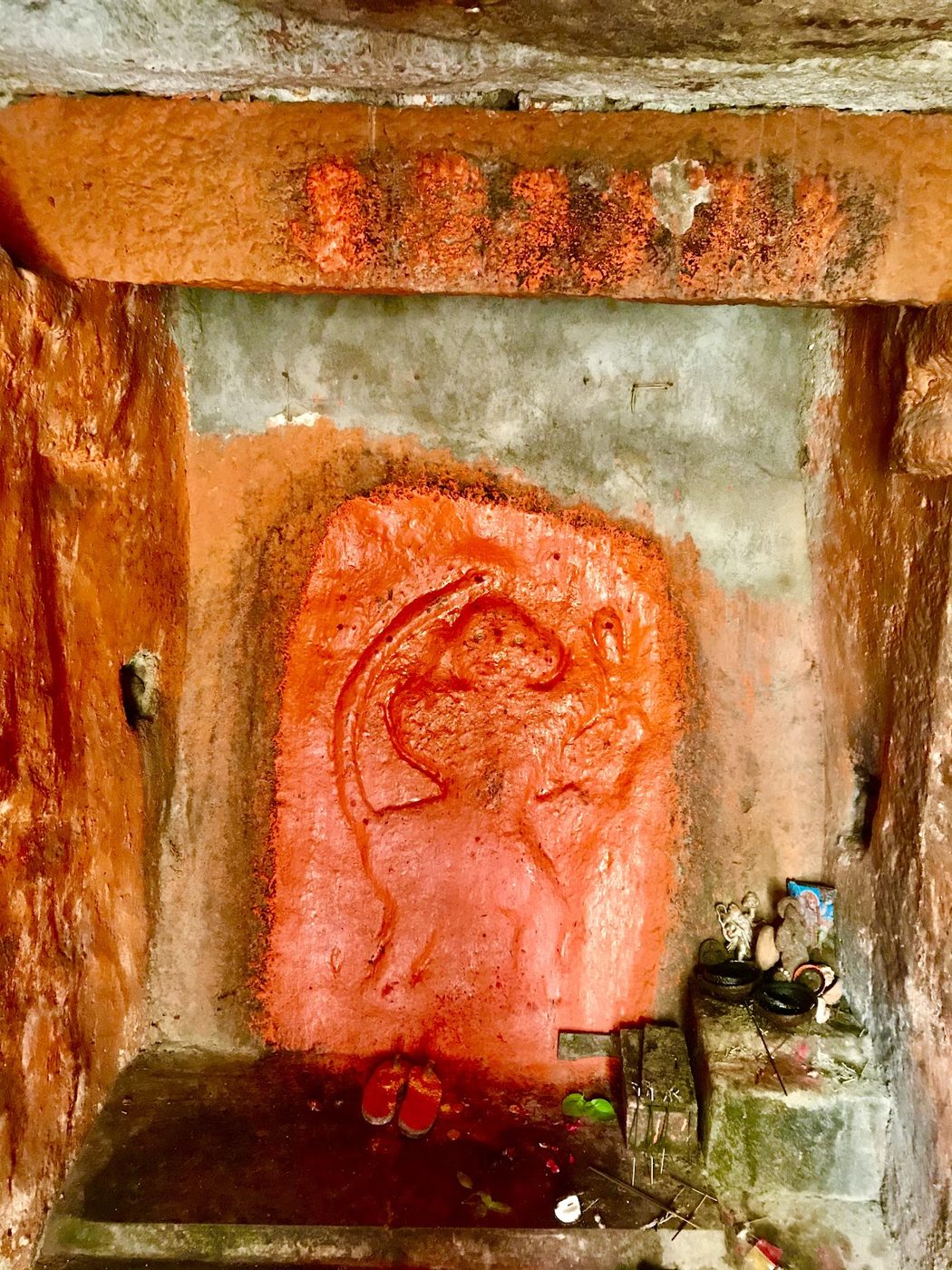
A Hanuman shrine set inside a narrow cave called Yamakonam, which devotees reportedly enter by crawling.
An ancient Ganesha temple on the hill, dated by tradition to the 13th century.
An ancient image of Goddess Bhadrakali venerated on the hill.
Alongside the ancient Shaiva shrines, the hill is home to the Sri Sadguru Dattatreya Siddhasramam — established in 1997 as a living centre of spiritual practice and seva.
It enshrines Sri Nrusimha Saraswathi Swamy, Lord Dattatreya with his divine family, and Sripada Sri Vallabha — revered incarnations of the Datta tradition. Pilgrims come here for meditation, satsang and the blessings of the Sadguru lineage.
The sanctum photograph is of this temple (via Google Maps). The individual sub-shrine tiles use representative art until dedicated photographs of each shrine are provided.